

Yesterday we had a fantastic tour of Ráth Cruachan or Rathcroghan and the mysterious Uaimh na gCat, Oweynagat.

This wonderful site in and around the village of Tulsk is well worth a visit. The tour is about 2 hours and our tour guide Elaine was fantastic, relating the archaeological findings and the rich mythology associated with this site.
First of all, it's not just one monument but a series of raths and earthworks and a cave, spread over a few kilometres. In Tulsk itself we have the remains of the fort, just behind the visitor’s centre and discoveries there have dated back as far as the Mesolithic era, up to 6000 BCE! It was also a place where the powerful Gaelic chieftains of the O'Connor Roe had a fort. Later under English rule, the much-hated Richard Bingham, the "Flail of Connacht", so known because of his brutality towards the Gaelic leaders, had a castle. Across the road is the remains of the Dominican friary founded in the mid-15th century. But of course, it is the mythology that is perhaps the most prominent aspect of this area so let's start with this!

Queen Maedhbh, the leader of Connacht is said to have ruled from this seat of power and it was here that she and her husband Ailil compared their own personal wealth, she falling short by one magnificent bull. That was her signal to try and equal his wealth and "borrow" another amazing bull from Dáire Mac Fiachna in County Louth (then in Ulster). And so began the saga of the Táin Bó Cuailnge or the Cattle Raid of Cooley whereby Maedhbh travelled the width of the country with her army to battle against the lone CúChullain, he being the only man to defend the promise as all the warriors were in the throes of labour pains, due to a curse put upon them by the Goddess Macha.
There is a dispute, if that's the right word as to where Maedhbh is buried. I say that with the acknowledgement that there is no direct evidence of her existence, as she appears to straddle the human and goddess world. However, allowing that she did live in Iron age times, the story that she's buried on Knocknarea in Sligo might appear more unlikely, especially as her seat was in Rathcroghan and I have to say this point was good humouredly emphasised many a time by the guide!

Then there is Fraoch the mighty warrior who fought for Maedhbh and died at the hands of CúChullain. There is a monument called Carn Fraích, Carnfree, or Fraech’s Cairn here as well as the famous Ogham inscription on the lintel stone of Uaimh na gCat cave which reads “Fraech, son of Maedhbh” and this is probably the oldest written reference to her.
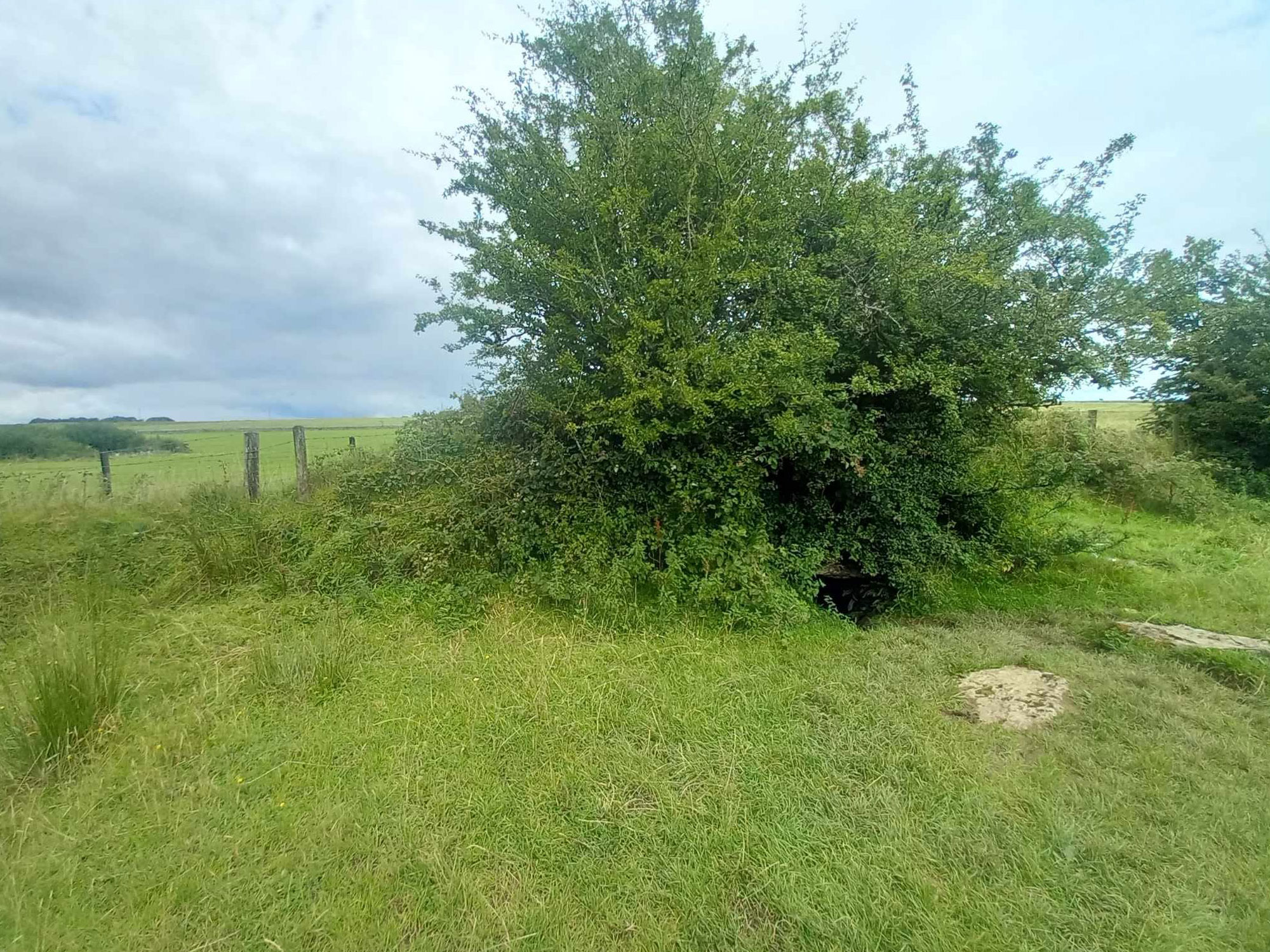
And what of Uaimh na gCat. The English, Oweynagat makes no sense whatsoever but in Irish it means Cave of the Cats. This Limes stone cavern is entered by a man-made souterrain, now shorter than it used to be and is perhaps the most famous and darkly mysterious place in this area. According to mythology, it was a residence of the Morrigan, the battle queen or Goddess, and young warriors would spend time in it’s darkness to face their fears and perhaps the Deity herself! It was said that at Samhain, her fantastical animals would come forth from the cave and wreak havoc upon the land and later Christian monks described it as Ifreann na hEireann or the Hell of Ireland.
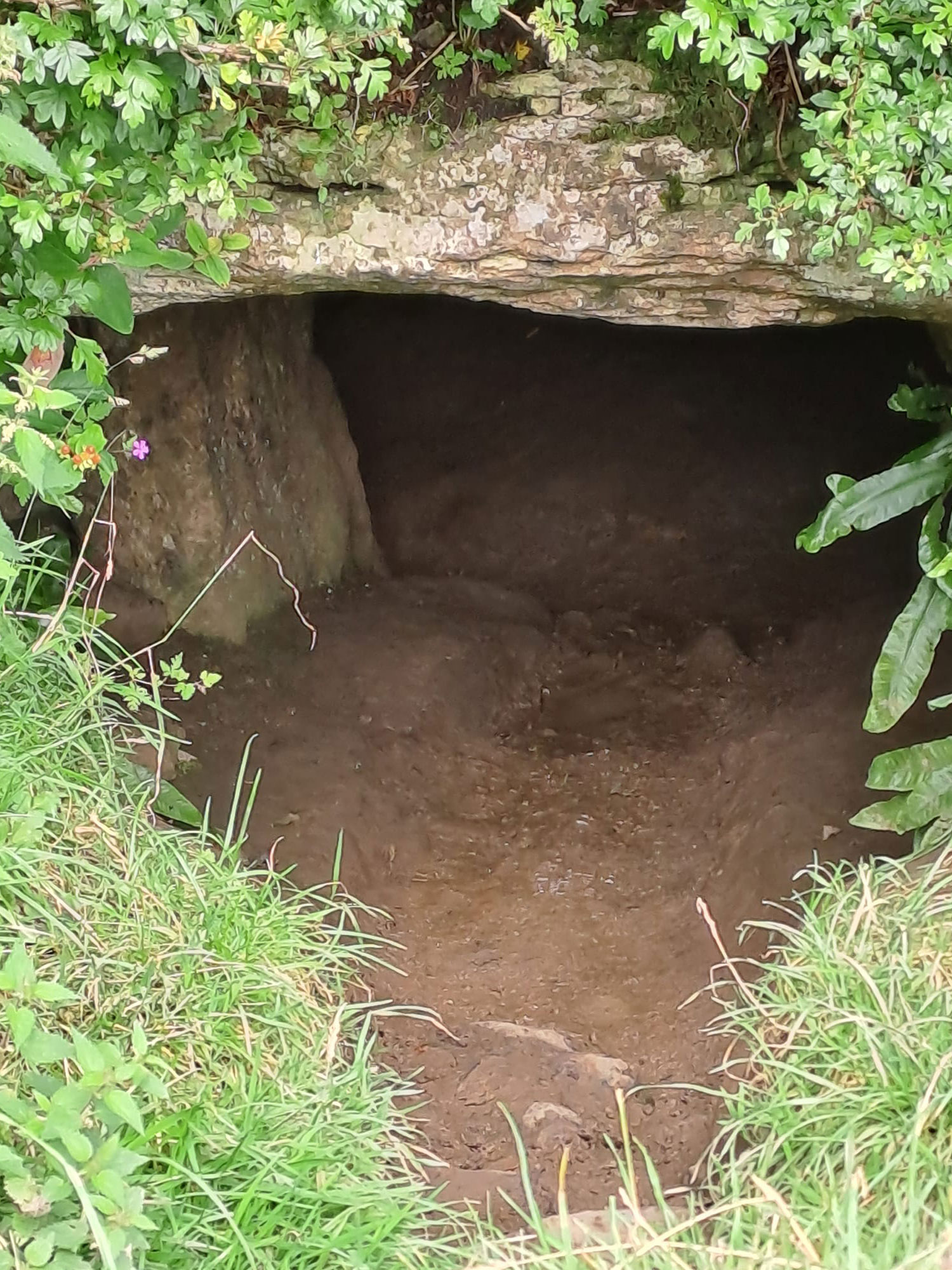

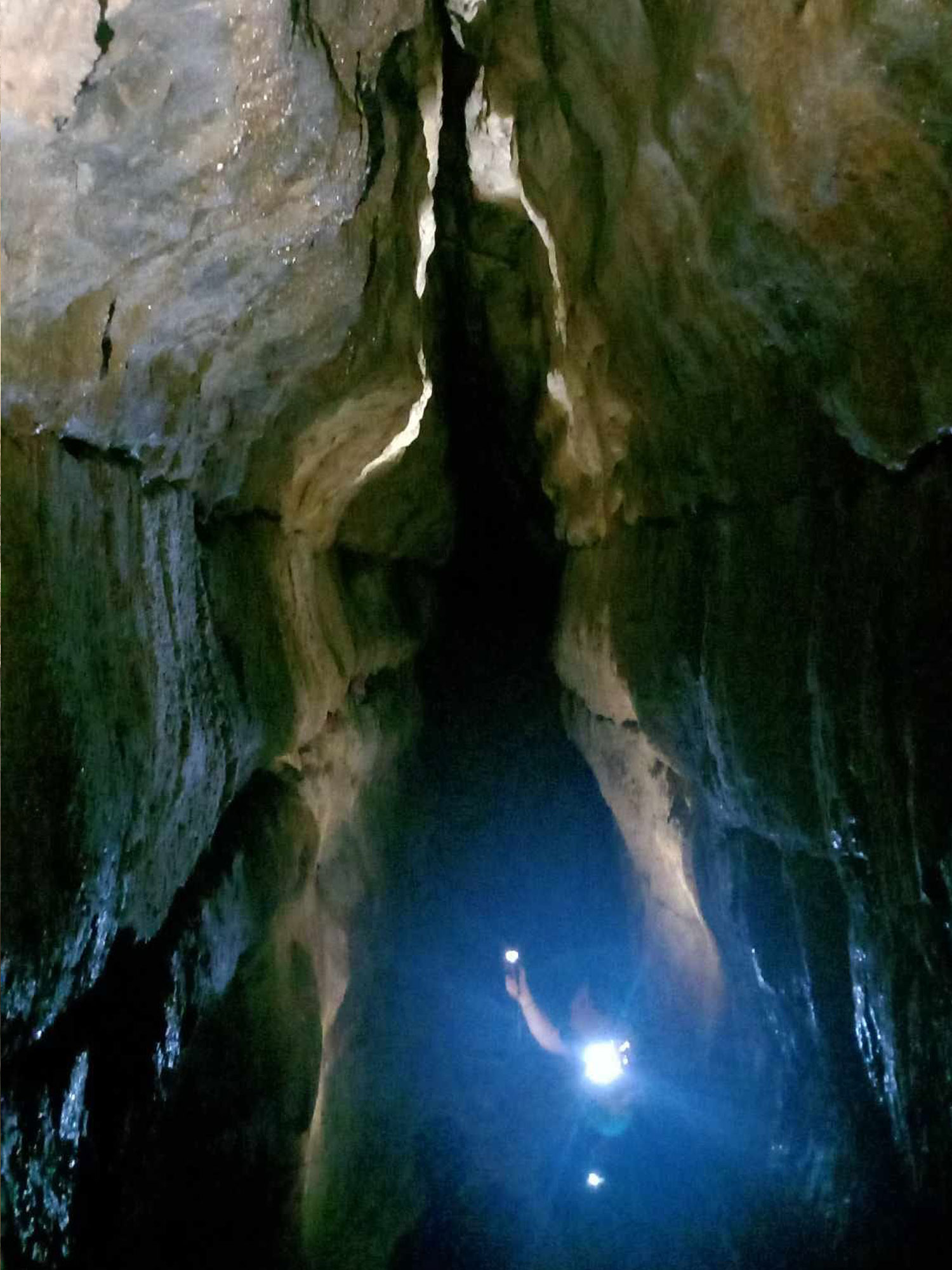
Now I have to say that I found the atmosphere really peaceful, even when we turned off our torches. It is entered through a fairly narrow opening and for a few metres, you have to almost go on your hands and knees before being able to stand and look upwards to the almost Gothic appearance of this subterranean world. You can’t go very far in as there is a high wall of rocks beyond that, and I believe it becomes impassible soon after. Still, it’s magnificent and so silent, bar the odd drip of water. Interestingly there is one piece of obvious graffiti on the way in, that of D HYDE, the first president of Ireland!
For any budding archaeologists, this place is a dream, with still many questions to be answered. The main Rathcroghan mound for instance has not been physically investigated but a geophysical survey and radar have unearthed interesting finds in this iron age monument. It is believed it was more for ceremony and ritual use as there is little defensive evidence. Other raths like Rathmore and Rathbeg point to a mixture of settlement and ceremonial purposes, while there are also older bronze age burial sites in the vicinity, such as the above mentioned Carnfree and Carnakit.
There is also an interesting fort called Cashelmanannan which relates to the sea God Manannan and this might appear unusual in an inland county, but he was also considered a guide to the Otherworld. Nearby are deep ridges cut into the ground called Na Muclaigh, The Mucklaghs of the Piggeries in English and these are said to have been dredged out by the tusks of huge wild boars. It is thought they may have been procession routes and are interestingly not far from the mysterious Uaimh nag Cat.
All in all, it is a fantastic tour, great little museum too with loads of information, in the actual visitor’s centre, which also has a giftshop and café. It’s the kind of tour I’d do again and again, and hopefully glean more knowledge each time!
